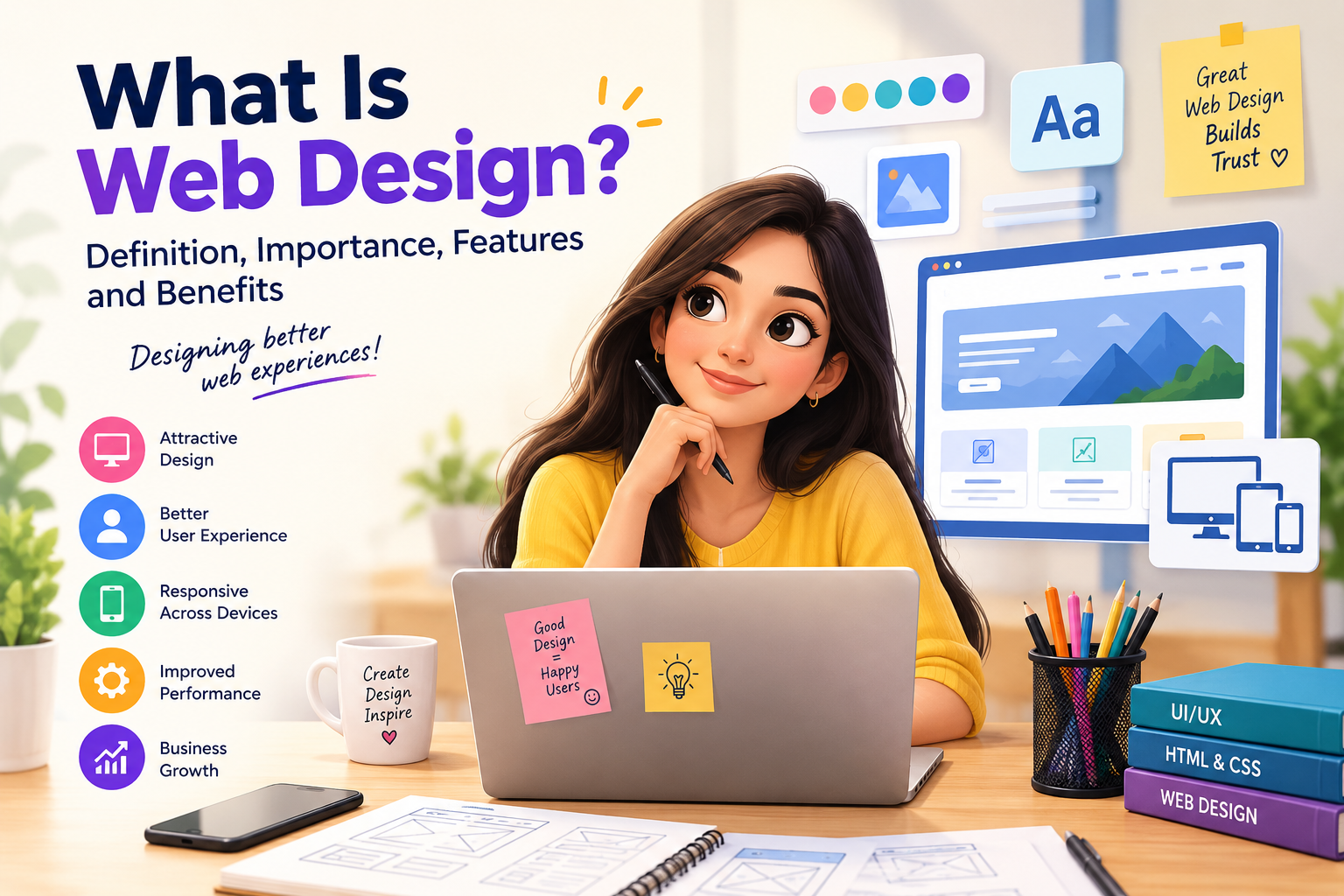
What Is Web Design? Definition, Importance, Features and Benefits
INTRODUCTION
In today’s digital world, a website is often the first point of contact between a business and its customers. Whether you are running a small business, an online store, a personal portfolio, or a large company, having a well-designed website is essential. But what is web design, and why is it so important for a successful online presence?In simple terms, web design is the process of planning, designing, creating, and organizing the visual and functional elements of a website. It combines creativity, technology, user experience, graphics, layouts, typography, colors, and interactive features to create websites that are attractive, easy to use, and effective.
What Is Web Design?
So, what is web design exactly? Web design refers to the process of creating the appearance, structure, layout, and overall experience of a website. It includes everything users see and interact with when they visit a web page.A web designer focuses on elements such as page layouts, color schemes, fonts, images, buttons, menus, icons, and other visual components. However, modern web design goes beyond simply making a website look attractive. It also focuses on usability, accessibility, responsiveness, website speed, and providing a smooth experience across different devices.For example, when you visit an e-commerce website, the placement of product images, prices, navigation menus, search bars, shopping-cart buttons, and checkout options are all influenced by web design.
Why Is Web Design Important?
Understanding what is web design also means understanding its importance for businesses and organizations. A website can strongly influence how visitors perceive a brand.A professional website creates a positive first impression and can make a business appear more trustworthy and reliable. On the other hand, a website with poor navigation, outdated graphics, slow loading times, or an unorganized layout can cause visitors to leave.Good web design helps businesses communicate their brand identity, present information clearly, attract potential customers, and encourage visitors to take desired actions such as making a purchase, submitting an inquiry, booking a service, or contacting the company.
Key Elements of Web Design
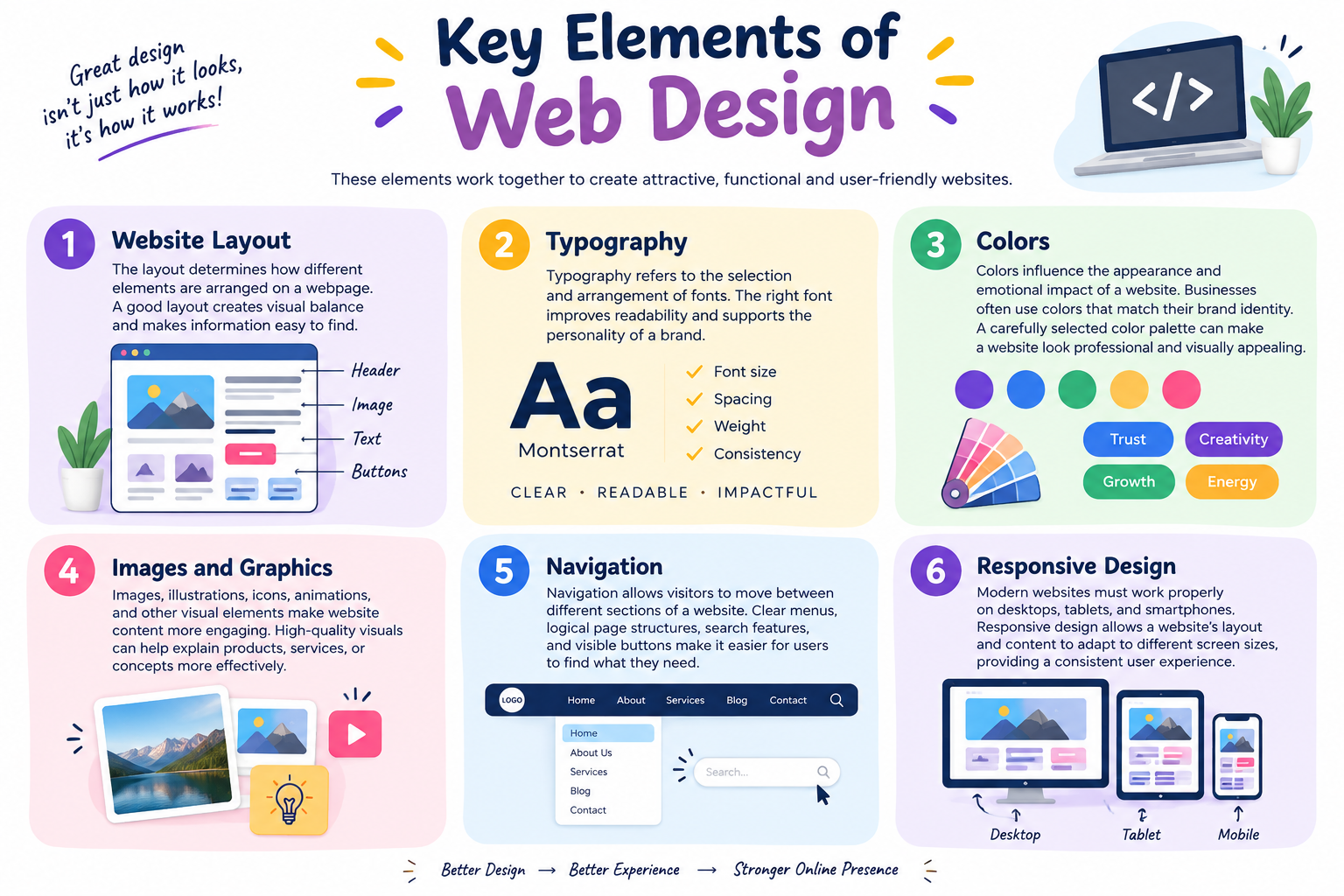
Now that we understand what is web design, let's look at some of its major elements.
1. Website Layout
The layout determines how different elements are arranged on a webpage. A good layout creates visual balance and makes information easy to find. Headings, images, text, buttons, and other elements should be positioned logically
2. Typography
Typography refers to the selection and arrangement of fonts. The right font improves readability and supports the personality of a brand. Designers need to consider font size, spacing, weight, and consistency across different pages
3. Colors
Colors influence the appearance and emotional impact of a website. Businesses often use colors that match their brand identity. A carefully selected color palette can make a website look professional and visually appealing
4. Images and Graphics
Images, illustrations, icons, animations, and other visual elements can make website content more engaging. High-quality visuals can help explain products, services, or concepts more effectively
5. Responsive Design
Modern websites must work properly on desktops, tablets, and smartphones. Responsive design allows a website's layout and content to adapt to different screen sizes, providing a consistent user experience.
Web Design and User Experience
One of the most important aspects of what is web design is user experience, often called UX. A beautiful website is not necessarily a successful website if visitors find it difficult to use.Web designers consider how users interact with pages, where they expect to find information, how quickly they can complete tasks, and whether the website is accessible to different users.A user-friendly website should have clear navigation, readable content, intuitive buttons, appropriate spacing, fast-loading pages, and a logical structure. These factors can improve engagement and help visitors stay longer on a website
Advantages of Professional Web Design
Professional web design offers several benefits to businesses. First, it can strengthen brand credibility by creating a polished and consistent online identity. Second, it can improve the user experience and make it easier for visitors to find information.A well-designed website can also support search engine optimization, improve engagement, generate leads, increase conversions, and help businesses compete in the digital marketplace.For e-commerce businesses, effective design can simplify product discovery and checkout. For service-based businesses, it can make contact forms, booking systems, and service information easier to access
A web designer is a professional who plans and creates the visual and interactive aspects of websites. Web designers commonly work with design principles, typography, colors, layouts, graphics, user experience, and web technologies.Depending on their role, designers may use tools such as Figma, Adobe XD, Photoshop, Illustrator, Canva, HTML, CSS, WordPress, and other website-building technologies.Successful web designers combine creative thinking with technical knowledge. They also need to understand current design trends and changing user expectations
Conclusion
So, what is web design? It is much more than choosing colors and placing images on a webpage. Web design is the complete process of creating a website that looks professional, communicates effectively, works across devices, and provides a smooth experience for visitors.As businesses continue to depend on digital platforms, quality web design has become an important part of building a strong online presence. A successful website combines attractive visuals, intuitive navigation, responsive layouts, accessibility, performance, and user-focused functionality.Whether you are creating a personal portfolio, launching an online store, or building a business website, understanding what is web design can help you create a digital experience that attracts visitors, builds trust, and supports long-term business growth