
reachoraa.com

🚀 Reachoraa Social Media Marketing Agency | Grow Your Brand • Increase Engagement • Generate More Leads • Expert Social Media Management & Advertising 🚀

Author name: sunsunwalshikha2001@gmail.com

influencer marketing

What Is Influencer Marketing? A Complete Guide for Businesses

What Is Influencer Marketing? A Complete Guide for Businesses in 2026 In today’s digital world, businesses are constantly looking for effective ways to connect with their target audience. Social media has become one of the most powerful platforms for building brand awareness, attracting customers, and increasing sales. One strategy that has gained significant popularity is influencer marketing.But what exactly does influencer marketing mean, and how can it help a business grow? In simple terms, it is a marketing strategy where businesses collaborate with individuals who have an established audience and influence on social media. These individuals, commonly known as influencers, promote a brand’s products or services to their followers. Understanding Influencer Marketing Influencer marketing is based on the idea of using a person’s credibility, relationship with their audience, and online presence to promote a business. Instead of communicating directly with customers through traditional advertisements, brands work with influencers who can introduce their products in a more personal and relatable way.Influencers can be found across platforms such as Instagram, YouTube, Facebook, TikTok, and other social media channels. They may create content around fashion, beauty, fitness, food, technology, travel, lifestyle, education, or other specific interests.The effectiveness of influencer marketing comes from the trust that influencers build with their audiences. When followers regularly engage with an influencer’s content, they may be more willing to consider a product or service recommended by that person. How Does Influencer Marketing Work? The process of influencer marketing generally begins when a business identifies its target audience and marketing objectives. The company then searches for influencers whose audience, content, and values match the brand.After selecting suitable influencers, the business can establish a partnership. Depending on the campaign, the influencer may create Instagram posts, reels, YouTube videos, stories, product reviews, tutorials, or other promotional content.For example, a skincare company may collaborate with a beauty influencer to demonstrate how its product works. Similarly, a restaurant could work with a food creator who visits the restaurant, tries its dishes, and shares the experience with their followers.The goal is not simply to gain followers. A successful influencer marketing campaign should help a business achieve measurable objectives such as increased brand awareness, website traffic, engagement, leads, or sales. Types of Influencers Not every influencer has millions of followers. In fact, businesses often work with different categories of influencers depending on their goals and budget Nano Influencers Nano influencers usually have a small but highly engaged audience. They can be useful for local businesses and niche brands because their followers may have strong trust in their recommendations. Micro Influencers Micro influencers have a larger audience while still maintaining a relatively personal relationship with their followers. They are often valuable for businesses targeting specific interests or communities. Macro Influencers Macro influencers have a substantial social media following and can provide brands with significant exposure. They are generally suitable for larger campaigns focused on reaching a broad audience Celebrity Influencers Celebrities and major online personalities can expose a product or service to millions of people. However, collaborations with them can require considerably higher budgets Benefits of Influencer Marketing Influencer marketing offers several benefits for businesses that want to build a stronger presence on social media and connect with their target audience in a more authentic way. One of the biggest advantages is increased brand awareness, as influencers can introduce a business, product, or service to a large and relevant audience within a short period. Instead of reaching people through traditional advertisements alone, brands can use an influencer’s existing community to communicate their message in a more natural and engaging manner. Another major benefit is building trust and credibility. Influencers usually spend considerable time creating content and developing relationships with their followers, so their recommendations can feel more personal and trustworthy than standard promotional advertisements. This trust can encourage potential customers to learn more about a brand and consider purchasing its products or services. Influencer marketing can also help businesses reach a specific target audience because influencers generally create content around particular niches such as beauty, fashion, food, fitness, technology, travel, education, or lifestyle. By selecting an influencer whose audience matches the brand’s ideal customers, businesses can make their promotional efforts more relevant and targeted. In addition, influencer collaborations can generate higher social media engagement through likes, comments, shares, saves, messages, and other interactions. Influencers can also create different types of content, including short-form videos, product demonstrations, reviews, tutorials, stories, and photographs, giving brands opportunities to present their products creatively. Another important advantage is the potential to increase website traffic and sales. When influencers include product links, discount codes, or calls to action in their content, interested followers can be encouraged to visit the business website and make a purchase. For small and growing businesses, working with micro or nano influencers can also be a cost-effective way to reach a highly engaged community without spending the large advertising budgets sometimes required for traditional campaigns. Furthermore, influencer campaigns can provide businesses with valuable insights into customer preferences and behavior by observing how audiences respond to promotional content. Comments, questions, shares, and reactions can help brands understand what customers like, what problems they have, and what influences their purchasing decisions. Overall, influencer marketing can help businesses improve visibility, establish credibility, reach relevant audiences, increase engagement, drive traffic, and support conversions when the right influencer and strategy are selected. However, the success of a campaign depends on choosing an influencer whose audience, content style, values, and engagement level genuinely match the brand’s objectives. Is Influencer Marketing Right for Every Business? Although influencer marketing can be highly effective, it may not be suitable for every business or every marketing objective. Companies should consider their target audience, budget, industry, and campaign goals before investing in influencer collaborations.For businesses that depend heavily on social media discovery, visual content, or community recommendations, influencer campaigns can be particularly useful. However, businesses should focus on finding the right audience rather than simply choosing the influencer with the largest following. Common Mistakes to Avoid Businesses can
DIGITAL MARKETING

Digital Marketing in 2026: Trends, Strategies, Benefits, and Career Opportunities

Digital Marketing in 2026: Trends, Strategies, Benefits, and Career Opportunities Introduction Digital marketing has become one of the most important ways for businesses to reach customers, build brand awareness, and generate sales. In 2026, the digital landscape is evolving faster than ever because of artificial intelligence, automation, changing consumer behavior, short-form video, search innovations, and data-driven advertising.Today, businesses of every size—from startups and local businesses to large companies—use digital marketing to connect with potential customers across search engines, websites, social media, email, mobile applications, and other online platforms. The biggest advantage is that businesses can measure performance and make improvements based on real-time data What Is Digital Marketing? Digital marketing is the practice of promoting products, services, or brands through digital channels. Instead of depending only on traditional advertising such as newspapers, television, radio, or billboards, businesses can reach specific audiences through online platforms.The process generally involves attracting potential customers, engaging them with useful content, building trust, and encouraging them to take an action such as making a purchase, submitting an enquiry, downloading an application, or contacting a business.Because customers spend a significant amount of time online, having a strong digital presence has become essential for modern businesses. Why Digital Marketing Is Important in 2026 The importance of digital marketing continues to increase because customers now research products and services online before making purchasing decisions. A person may discover a brand through social media, search for reviews on Google, visit its website, watch a video, and finally make a purchase through an online platform.This creates multiple opportunities for businesses to interact with customers throughout their buying journey. Unlike many traditional marketing methods, online campaigns can also be tracked using metrics such as impressions, clicks, engagement, leads, conversions, and return on advertising spend.This measurable nature allows businesses to understand which strategies are producing results and where improvements are needed. Major Digital Marketing Strategies in 2026 1. Search Engine Optimization Search Engine Optimization, commonly known as SEO, remains an important part of digital marketing. SEO helps websites improve their visibility when people search for relevant information, products, or services.In 2026, SEO is becoming more focused on useful content, search intent, user experience, topical authority, and providing clear answers. Businesses need to create genuinely valuable content instead of simply filling pages with keywords. 2. Social Media Marketing Social media has become a major communication channel for businesses. Platforms such as Instagram, Facebook, LinkedIn, YouTube, and other emerging platforms allow brands to communicate directly with their audiences.Social media digital marketing strategies can include educational posts, short-form videos, influencer collaborations, community engagement, product demonstrations, and paid advertising.The focus is increasingly shifting from simply gaining followers to generating meaningful engagement, leads, and conversions. 3. Content Marketing Content marketing involves creating useful and relevant content to attract and retain an audience. Blog articles, videos, infographics, podcasts, guides, newsletters, and social media content can all support a brand’s online presence.In 2026, high-quality and original content is particularly important. Businesses that understand their audience’s questions, problems, and interests can create content that builds credibility and encourages customers to take action. 4. AI-Powered Marketing Artificial intelligence is transforming digital marketing in 2026. Marketers can use AI tools to generate content ideas, analyze customer behavior, personalize communication, automate repetitive tasks, and identify patterns in marketing data.However, AI should support human creativity rather than completely replace it. Businesses still need authentic brand messaging, accurate information, creative thinking, and a strong understanding of their customers. 5. Paid Advertising Paid advertising allows businesses to reach specific audiences through platforms such as search engines and social media networks. Marketers can target users according to factors such as interests, demographics, behavior, keywords, and previous interactions.A successful paid digital marketing campaign requires proper audience research, compelling creative content, effective landing pages, continuous testing, and performance analysis. Benefits of Digital Marketing for Businesses One of the biggest advantages of digital marketing is its ability to reach targeted audiences. A small business can promote its products to people in a specific location or audience segment without needing the massive advertising budget traditionally associated with television or print advertising.Other benefits include measurable results, flexible budgets, faster communication, audience targeting, brand visibility, lead generation, and the ability to build long-term customer relationships.Businesses can also experiment with different campaigns and quickly identify which approaches work best. Digital Marketing Career Opportunities in 2026 The growth of online businesses has created numerous career opportunities in digital marketing. Professionals can specialize in areas such as SEO, social media management, paid advertising, content writing, copywriting, email marketing, influencer marketing, analytics, and website management.There are also opportunities to work as a digital marketing executive, SEO specialist, social media manager, performance marketer, content strategist, or freelance marketer.For people entering this field, practical skills are extremely valuable. Creating campaigns, managing social media accounts, developing websites, analyzing data, and building a portfolio can help demonstrate real-world capabilities. Future of Digital Marketing The future of digital marketing will likely become increasingly personalized, automated, and data-driven. AI will continue to influence content creation, customer service, advertising, search, and analytics.However, technology alone will not guarantee success. Businesses will still need creativity, authenticity, strong customer relationships, and a clear understanding of their target audience.Brands that combine technology with human-centered communication will be better positioned to adapt to changing consumer expectations. Conclusion Digital marketing in 2026 is no longer simply about having an online presence. It is about creating meaningful customer experiences across multiple digital touchpoints. From SEO and social media to AI, content marketing, and paid advertising, businesses have more opportunities than ever to reach and engage their audiences.As technology continues to evolve, marketers who continuously develop their skills, understand data, experiment with new strategies, and focus on customer needs can create stronger and more effective campaigns. For businesses and professionals alike, digital marketing remains a powerful and rapidly evolving field with significant opportunities for growth.

WEB DESIGN

What Is Web Design? Definition, Importance, Features and Benefits

What Is Web Design? Definition, Importance, Features and Benefits INTRODUCTION In today’s digital world, a website is often the first point of contact between a business and its customers. Whether you are running a small business, an online store, a personal portfolio, or a large company, having a well-designed website is essential. But what is web design, and why is it so important for a successful online presence?In simple terms, web design is the process of planning, designing, creating, and organizing the visual and functional elements of a website. It combines creativity, technology, user experience, graphics, layouts, typography, colors, and interactive features to create websites that are attractive, easy to use, and effective. What Is Web Design? So, what is web design exactly? Web design refers to the process of creating the appearance, structure, layout, and overall experience of a website. It includes everything users see and interact with when they visit a web page.A web designer focuses on elements such as page layouts, color schemes, fonts, images, buttons, menus, icons, and other visual components. However, modern web design goes beyond simply making a website look attractive. It also focuses on usability, accessibility, responsiveness, website speed, and providing a smooth experience across different devices.For example, when you visit an e-commerce website, the placement of product images, prices, navigation menus, search bars, shopping-cart buttons, and checkout options are all influenced by web design. Why Is Web Design Important? Understanding what is web design also means understanding its importance for businesses and organizations. A website can strongly influence how visitors perceive a brand.A professional website creates a positive first impression and can make a business appear more trustworthy and reliable. On the other hand, a website with poor navigation, outdated graphics, slow loading times, or an unorganized layout can cause visitors to leave.Good web design helps businesses communicate their brand identity, present information clearly, attract potential customers, and encourage visitors to take desired actions such as making a purchase, submitting an inquiry, booking a service, or contacting the company. Key Elements of Web Design Now that we understand what is web design, let’s look at some of its major elements. 1. Website Layout The layout determines how different elements are arranged on a webpage. A good layout creates visual balance and makes information easy to find. Headings, images, text, buttons, and other elements should be positioned logically 2. Typography Typography refers to the selection and arrangement of fonts. The right font improves readability and supports the personality of a brand. Designers need to consider font size, spacing, weight, and consistency across different pages 3. Colors Colors influence the appearance and emotional impact of a website. Businesses often use colors that match their brand identity. A carefully selected color palette can make a website look professional and visually appealing 4. Images and Graphics Images, illustrations, icons, animations, and other visual elements can make website content more engaging. High-quality visuals can help explain products, services, or concepts more effectively 5. Responsive Design Modern websites must work properly on desktops, tablets, and smartphones. Responsive design allows a website’s layout and content to adapt to different screen sizes, providing a consistent user experience. Web Design and User Experience One of the most important aspects of what is web design is user experience, often called UX. A beautiful website is not necessarily a successful website if visitors find it difficult to use.Web designers consider how users interact with pages, where they expect to find information, how quickly they can complete tasks, and whether the website is accessible to different users.A user-friendly website should have clear navigation, readable content, intuitive buttons, appropriate spacing, fast-loading pages, and a logical structure. These factors can improve engagement and help visitors stay longer on a website Advantages of Professional Web Design Professional web design offers several benefits to businesses. First, it can strengthen brand credibility by creating a polished and consistent online identity. Second, it can improve the user experience and make it easier for visitors to find information.A well-designed website can also support search engine optimization, improve engagement, generate leads, increase conversions, and help businesses compete in the digital marketplace.For e-commerce businesses, effective design can simplify product discovery and checkout. For service-based businesses, it can make contact forms, booking systems, and service information easier to access Who Is a Web Designer? A web designer is a professional who plans and creates the visual and interactive aspects of websites. Web designers commonly work with design principles, typography, colors, layouts, graphics, user experience, and web technologies.Depending on their role, designers may use tools such as Figma, Adobe XD, Photoshop, Illustrator, Canva, HTML, CSS, WordPress, and other website-building technologies.Successful web designers combine creative thinking with technical knowledge. They also need to understand current design trends and changing user expectations Conclusion So, what is web design? It is much more than choosing colors and placing images on a webpage. Web design is the complete process of creating a website that looks professional, communicates effectively, works across devices, and provides a smooth experience for visitors.As businesses continue to depend on digital platforms, quality web design has become an important part of building a strong online presence. A successful website combines attractive visuals, intuitive navigation, responsive layouts, accessibility, performance, and user-focused functionality.Whether you are creating a personal portfolio, launching an online store, or building a business website, understanding what is web design can help you create a digital experience that attracts visitors, builds trust, and supports long-term business growth

graphic design

What is Graphic design

What Is Graphic Design? A Complete Guide for Beginners INTRODUCTION What is graphic design? Graphic design is the process of creating visual content to communicate information, ideas, or messages to a specific audience. It combines creative elements such as typography, colors, images, illustrations, shapes, and layouts to make information visually attractive and easy to understand.Today, graphic design is everywhere. From social media posts and websites to advertisements, product packaging, business cards, magazines, and logos, businesses use design to communicate with customers. Whether you are looking at an Instagram advertisement or the packaging of your favorite product, you are experiencing graphic design. What Is Graphic Design and Why Is It Important? To understand what is graphic design, it is important to understand its purpose. Graphic design is not simply about making something look beautiful. Its primary goal is to communicate a message effectively through visual elements.A well-designed poster, for example, can immediately tell people about an upcoming event. Similarly, a professionally designed advertisement can attract attention and encourage customers to purchase a product or service.Good graphic design makes communication faster and clearer. It helps viewers understand information without having to read large amounts of text. This is particularly important for businesses because attractive visuals can influence how customers perceive a brand Main Elements of Graphic Design Several important elements work together to create effective designs. Understanding these elements can help you better understand what is graphic design and how professional designers create visual content Typography Typography refers to the selection and arrangement of fonts and text. Different fonts can create different feelings. For example, a bold font may communicate strength, while an elegant font can create a sophisticated appearance. Colors Colors have an important role in visual communication. Different colors can create different emotions and associations. Businesses often select specific colors for their branding so customers can easily recognize them. Images and Illustrations Images help communicate ideas quickly and make content more engaging. Photographs, icons, illustrations, and graphics can be combined with text to create an effective visual message. Layout Layout refers to how different elements are arranged within a design. A good layout creates visual balance and helps viewers understand the most important information first. What Is Graphic Design Used For? Graphic design has applications across almost every industry. Businesses use it to promote their products, establish their identity, and communicate with their target audience Logo and brand identity designSocial media postsWebsite graphicsPosters and bannersBrochures and flyersProduct packagingBusiness cardsAdvertisementsPresentationsInfographicsYouTube thumbnails For example, a restaurant may use graphic design to create an attractive menu, social media advertisements, packaging, and promotional posters. Similarly, an online business may use design for its website, email campaigns, social media content, and digital advertisements Benefits of Good Graphic Design Effective graphic design can provide several benefits to businesses. First, it helps create a strong visual identity. Consistent colors, fonts, logos, and design styles can make a brand recognizable.Second, professional visuals can improve communication. Instead of explaining complex information through lengthy paragraphs, businesses can use graphics, icons, and infographics to make information easier to understand.Third, attractive design can increase engagement. A visually appealing social media post or advertisement is more likely to capture attention and encourage people to interact with the content How to Start Learning Graphic Design If you are interested in learning what is graphic design and becoming a designer, you can start with the fundamentals. Learn about typography, colors, layouts, composition, and visual hierarchy before moving toward advanced techniques.Beginners can start with simple tools such as Canva and gradually explore professional software such as Photoshop and Illustrator. Practicing regularly is equally important. Try creating social media posts, posters, logos, advertisements, and banners to develop your skills.You can also study existing designs and ask yourself why certain colors, fonts, images, and layouts were used. This helps develop your visual understanding What Skills Does a Graphic Designer Need? A graphic designer needs both creative and technical skills. Creativity helps designers develop original ideas, while technical knowledge allows them to turn those ideas into professional designs. Important skills include:Understanding color theoryTypographyComposition and layoutCreative thinkingVisual communicationImage editingBrandingBasic marketing knowledgeAttention to detailDesigners may also use software such as Canva, Adobe Photoshop, Adobe Illustrator, and Adobe InDesign to create different types of visual content Conclusion So, what is graphic design? It is a creative communication process that combines visual elements such as typography, colors, images, shapes, and layouts to deliver a message effectively. It is much more than decoration—it helps businesses communicate, build their identity, attract customers, and create memorable experiences.From a simple social media post to a complete brand identity, graphic design has become an essential part of modern communication. With creativity, practice, and the right tools, anyone interested in visual communication can begin developing graphic design skills and turn them into a valuable professional career

social media marketing
SMM

what is social media marketing

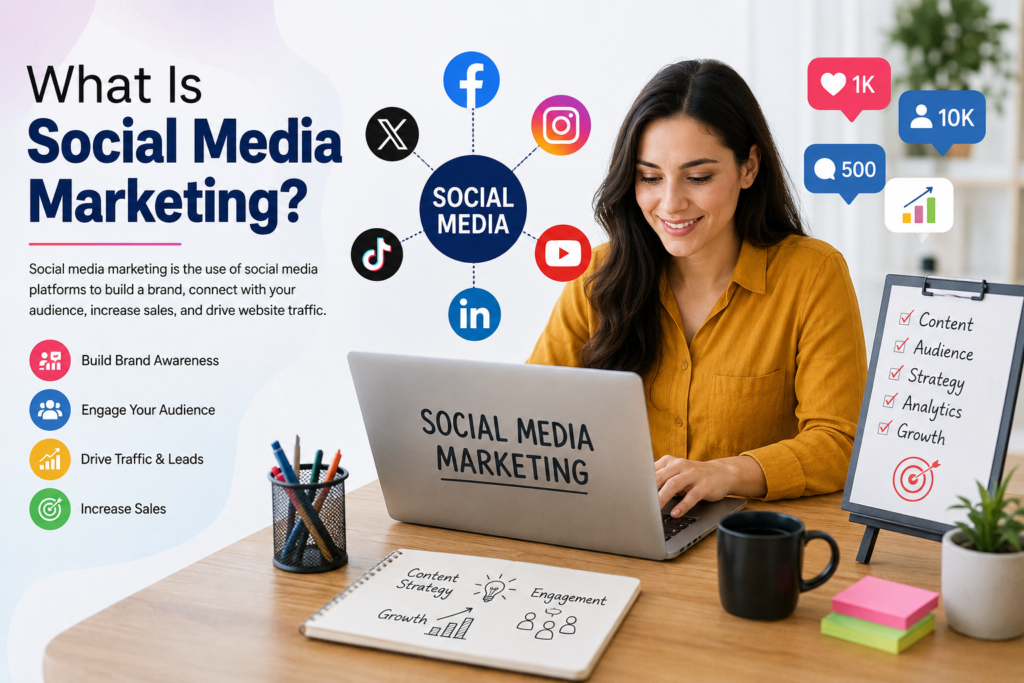
What Is Social Media Marketing? If you are wondering what is social media marketing, it is the practice of using social media platforms to promote a business, build a brand, connect with customers, and achieve marketing goals. Businesses use platforms such as Facebook, Instagram, YouTube, LinkedIn, TikTok, and X to reach their target audience and communicate with potential customers. In simple words, what is social media marketing can be explained as marketing your products, services, or brand through social media. Unlike traditional marketing, social media allows businesses to interact directly with their audience, receive instant feedback, and track marketing performance. Today, social media has become an important part of digital marketing because billions of people use social platforms every day. This provides businesses with opportunities to increase visibility, generate leads, build relationships, and drive sales Why Is Social Media Marketing Important? Understanding what is social media marketing is important for businesses of every size. Whether it is a small local business, an e-commerce store, or a large company, social media can help reach potential customers more effectively. One of the biggest advantages of social media marketing is its ability to reach a specific target audience. Businesses can target users based on factors such as age, location, interests, online behavior, and demographics. Social media also helps businesses create brand awareness. Regularly sharing useful, entertaining, and engaging content can help a company remain visible in front of its audience. Over time, this consistent presence can help build trust and brand recognition. Types of Social Media Marketing There are several approaches to social media marketing. Understanding these methods makes what is social media marketing easier to understand. 1. Organic Social Media Marketing Organic marketing involves creating and sharing content without paying for advertising. Businesses can post educational content, product updates, behind-the-scenes videos, customer testimonials, and engaging social media posts.The goal is to build a genuine relationship with the audience and encourage engagement through likes, comments, shares, saves, and messages 2. Paid Social Media Advertising Paid social media marketing involves paying platforms to show advertisements to selected audiences. Platforms such as Meta, LinkedIn, TikTok, and YouTube provide advertising tools that allow businesses to target specific groups of users.Paid campaigns can be used for different objectives, including brand awareness, website traffic, lead generation, app installations, and sales. 3. Influencer Marketing Influencer marketing involves collaborating with creators who have an established audience. Influencers can introduce products or services to their followers through videos, reviews, demonstrations, or sponsored content.This approach can help brands reach niche audiences and build credibility Benefits of Social Media Marketing Knowing what is social media marketing also means understanding its major benefits. One important benefit is increased brand awareness. Businesses can reach large audiences without depending entirely on traditional advertising methods.Another advantage is customer engagement. Social media provides businesses with direct communication channels where customers can ask questions, provide feedback, and interact with brands.Social media can also support website traffic and lead generation. Businesses can use links, calls to action, advertisements, and valuable content to encourage users to visit their websites.Additionally, social media provides useful performance data. Marketers can analyze impressions, reach, engagement, clicks, conversions, and other metrics to understand how their campaigns are performing. Popular Social Media Platforms for Marketing When learning what is social media marketing, it is important to understand that every platform has a different audience and purpose.Facebook is useful for community building, advertising, and reaching diverse audiences. Instagram is highly effective for visual content, reels, fashion, food, beauty, and e-commerce brands.YouTube is suitable for long-form videos, tutorials, product demonstrations, reviews, and educational content. LinkedIn focuses more on professional networking, B2B marketing, recruitment, and thought leadership.TikTok and similar short-form video platforms can help brands reach audiences through entertaining and creative videos, while X can be useful for conversations, news, opinions, and real-time engagement. Social Media Marketing Strategy A successful strategy is an important part of understanding what is social media marketing in practice. Businesses should first define their goals, such as increasing followers, generating leads, improving engagement, or increasing sales.The next step is identifying the target audience and researching what type of content they prefer. Marketers can then create a content calendar and maintain a consistent posting schedule.Businesses should also monitor analytics regularly. Data can show which posts perform well and which areas need improvement. Based on these insights, marketers can optimize their future content and advertising campaigns. Conclusion So, what is social media marketing? It is a powerful digital marketing approach that uses social media platforms to connect businesses with their target audience, promote products and services, build brand awareness, and generate business results.From organic content and paid advertising to influencer collaborations and customer engagement, social media marketing offers businesses many ways to grow online. With the right strategy, consistent content, audience research, and performance tracking, social media can become an important channel for long-term business growth.For businesses looking to compete in today’s digital environment, understanding what is social media marketing is no longer optional—it is an essential part of building a strong online presence. Contact us

Scroll to Top